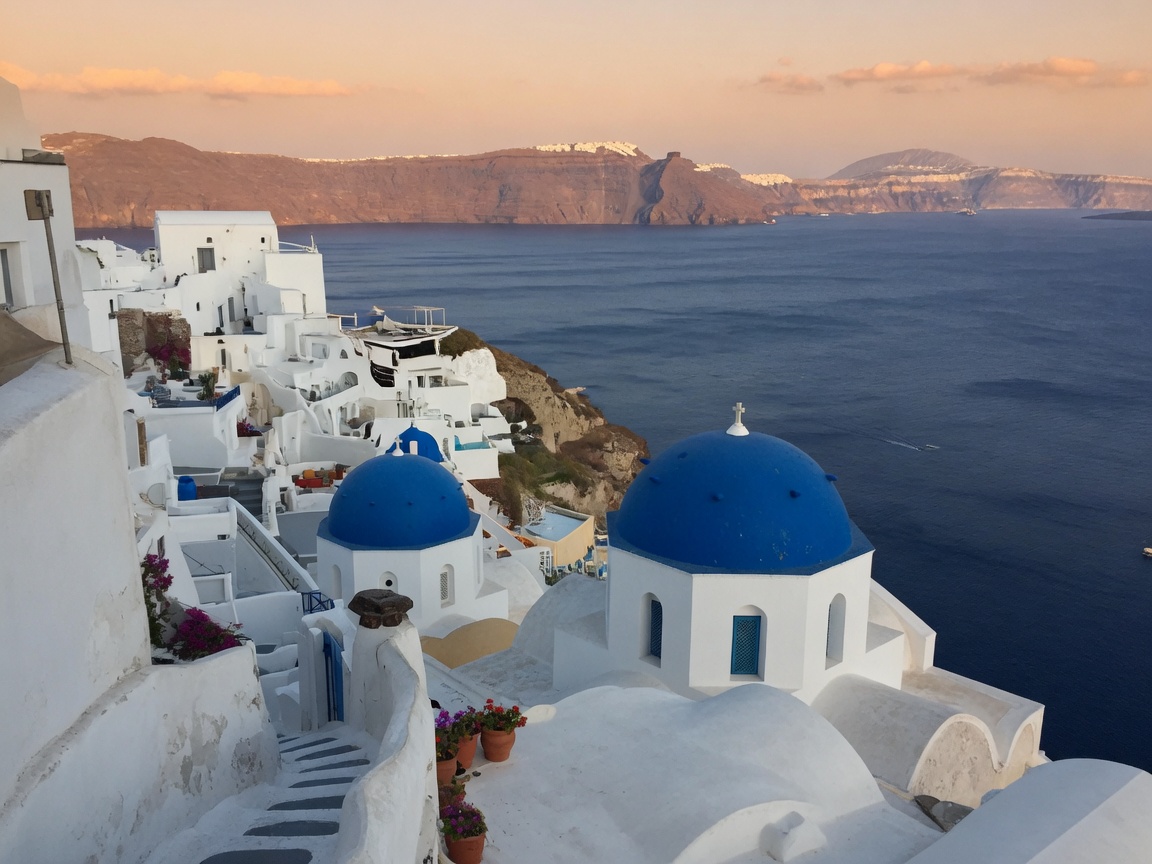
Santorini: Aegean Volcanic Splendor
Shaped in 1600 BCE by the massive Minoan eruption that plunged the center of ancient Thira into the sea, Santorini is the quintessential wonder of the Cyclades. Perched 300 meters above the submerged caldera rim, the villages of Fira and Oia feature iconic subterranean cave architecture, whitewashed cubic facades, and cobalt blue domes.
| Country & Coordinates | Greece • 36.3932° N, 25.4615° E |
|---|---|
| Optimal Season Windows | Spring (April–June) • Autumn (September–October) |
| Primary Topography | Flooded Volcanic Caldera Rim & Lava Stratifications |
| Archaeological Marvel | Bronze Age Prehistoric Settlement of Akrotiri |
| Maritime Port Access | Athinios Ferry Port (High-Speed Catamarans from Piraeus) |
| Viticulture Profile | Assyrtiko Wine Grown in Low Volcanic 'Kouloura' Baskets |
Field Logistics & Travel Authentication Standard
Key field recommendations formulated by Happyrostallyguid for exploring the Cyclades:
1. Fira to Oia Caldera Walking Trail
A classic 10-kilometer cliff-edge footpath tracing the rim from Fira via Firostefani and Imerovigli to Oia. Best undertaken starting at 07:30 AM before midday volcanic thermal heat reflects off the black pumice stone.
2. Cruise Tender & Cable Car Logistics
Cruise tenders dock at the Old Port of Fira. Travelers can reach the clifftop town center via the modern electric cable car rather than overburdened animal transport.
3. Red Beach & Caldera Geology
The southern coast features towering red scoria lava cliffs at Kokkini Paralia, while the Akrotiri excavation showcases multistory Minoan dwellings preserved under ash for 3,600 years.